
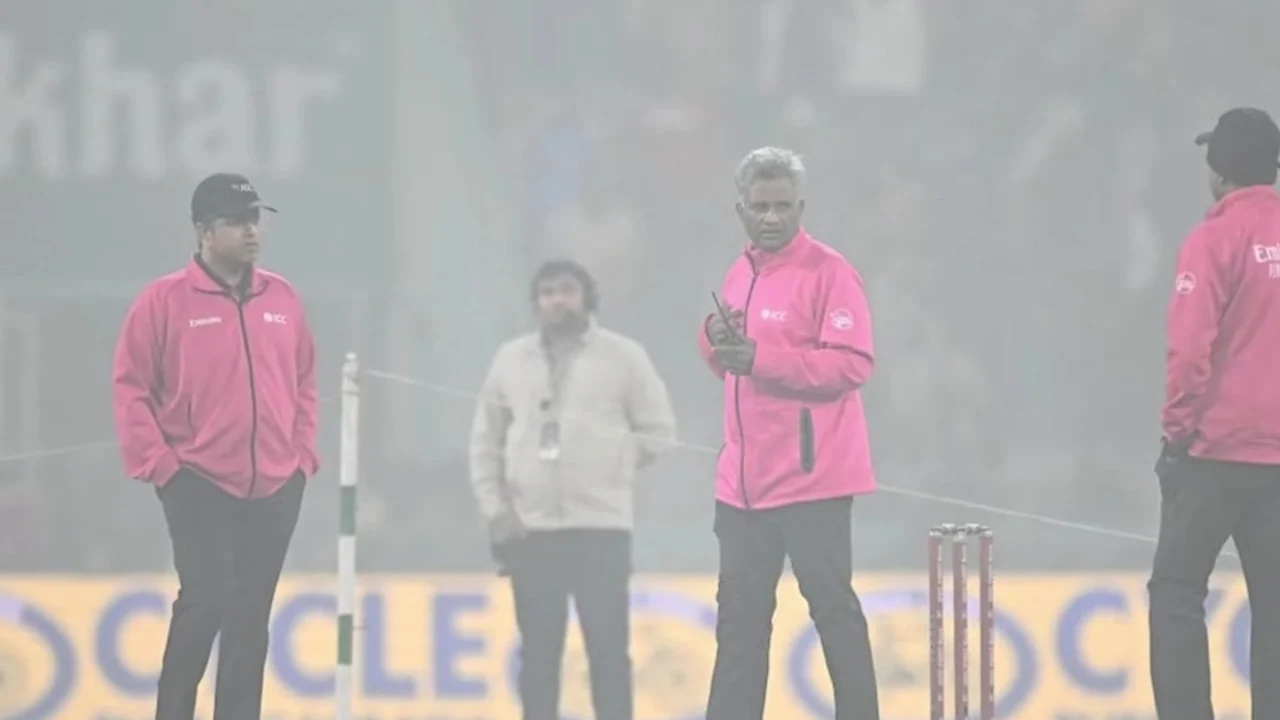
The cancellation of the fourth T20I match between India and South Africa in Lucknow has ignited significant discussion in Indian cricket administration. Due to dangerous weather conditions preventing any play, BCCI vice-president Rajeev Shukla has issued a stern caution, indicating that winter cricket in North India might become impractical.
The event has not only prompted inquiries regarding scheduling choices but has also heightened worries about player safety amid serious air pollution.
Rajeev Shukla Flags ‘Emergency’ Situation Over Air Pollution
Speaking exclusively after the match was called off, Rajeev Shukla acknowledged the gravity of the situation and indicated that the Board of Control for Cricket in India (BCCI) may be forced to reconsider its long-standing winter scheduling practices.
“BCCI will have to rethink winter scheduling and stop matches in North India,” Shukla said, making it clear that the issue can no longer be treated as a routine disruption. He described air pollution as “an emergency” that demands urgent attention rather than temporary adjustments.
His remarks underline a potential policy shift as cricket administrators confront increasingly hostile playing conditions during the winter months.
Lucknow T20I Abandoned Without a Ball Bowled
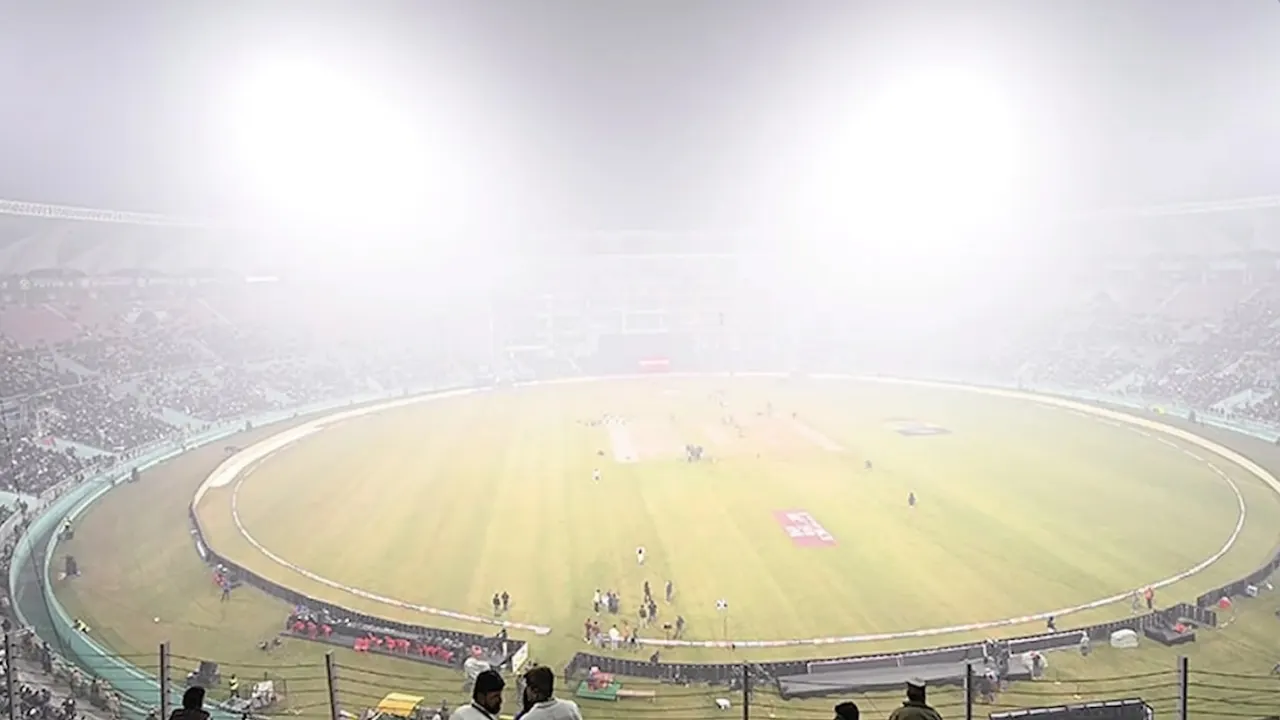
The fourth T20I at the Bharat Ratna Shri Atal Bihari Vajpayee Ekana Stadium was officially abandoned on Wednesday due to “excessive fog.” However, the actual challenge went beyond fog, as a thick blanket of smog severely reduced visibility and posed health risks to players and officials.
The contest was scheduled to begin at 7:00 pm, but conditions failed to improve despite six separate inspections. Eventually, the match was abandoned at around 9:30 pm, with visibility worsening as the evening progressed.
This marked only the second instance in international cricket history where a match was abandoned due to fog, highlighting the rarity and seriousness of the situation.
Dangerous AQI Levels Raise Safety Issues
A particularly concerning element of the neglect was the Air Quality Index (AQI) in Lucknow, which remained over 400, categorizing it as ‘hazardous.’
The seriousness of pollution was clearly apparent. Indian all-rounder Hardik Pandya was spotted wearing a surgical mask during his warm-up routine, a photo that rapidly circulated online and heightened criticism regarding the scheduling choice.
Players allegedly reduced their warm-up sessions by 7:30 pm, and by 9:00 pm, significant portions of the audience had started exiting the stadium, realizing that the game was improbable.
Rajeev Shukla’s On-Field Presence Reflects BCCI Mood
During one of the inspections, Rajeev Shukla himself walked onto the field to assess the situation. His interaction with match officials and his visibly disappointed body language captured the frustration surrounding the abandonment.
The lack of a reserve day meant there was no alternative but to call off the match entirely. As a result, both teams are now set to travel to Ahmedabad, where the series decider will be played on Friday, with India currently leading the series 2–1.
Winter Scheduling in North India Under Scrutiny
The Lucknow abandonment has intensified broader criticism regarding venue selection for the South Africa tour. The series included matches in New Chandigarh, Dharamsala, and Lucknow during November and December, a period known for fog, cold temperatures, and severe pollution in North India.
Just a week earlier, the T20I in Dharamsala was played in sub-10-degree temperatures, conditions that players found challenging. Spinner Varun Chakravarthy later admitted that the cold weather made playing conditions “quite challenging.”
These repeated weather-related issues have strengthened the argument that winter cricket in the region may no longer be sustainable.
Rajeev Shukla’s Alerts Indicate Possible Policy Change
Rajeev Shukla’s remarks suggest that the BCCI is now ready to address environmental issues seriously. His recognition that air pollution constitutes an emergency implies that upcoming scheduling choices might put a greater emphasis on player health and safety than in the past.
Although an official decision has not been made public, Shukla’s remarks indicate one of the most explicit acknowledgments from the BCCI leadership that significant alterations might be required.
2 thoughts on “Rajeev Shukla Calls for Halt to Winter Cricket in North India After Lucknow T20I Abandoned Due to Fog”