


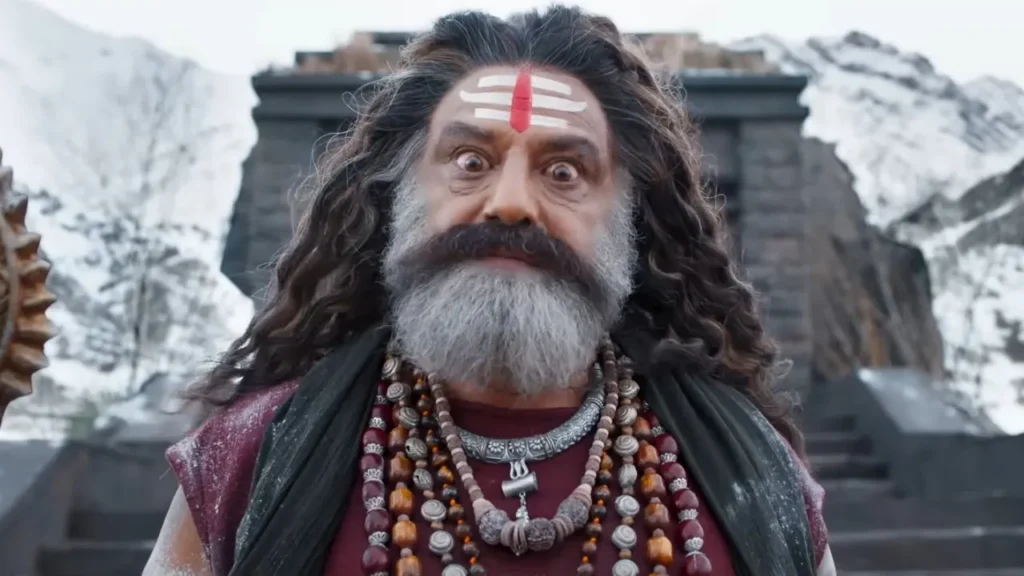
Akhanda 2 arrives with the same unmistakable Boyapati Sreenu signature — thunderous elevation, divine mass moments, and an unapologetic dismissal of physics. Titled Akhanda 2: Thaandavam, the sequel transports audiences straight into a world where logic is politely asked to wait outside the theatre while Balakrishna takes over as the nation’s unofficial security force.

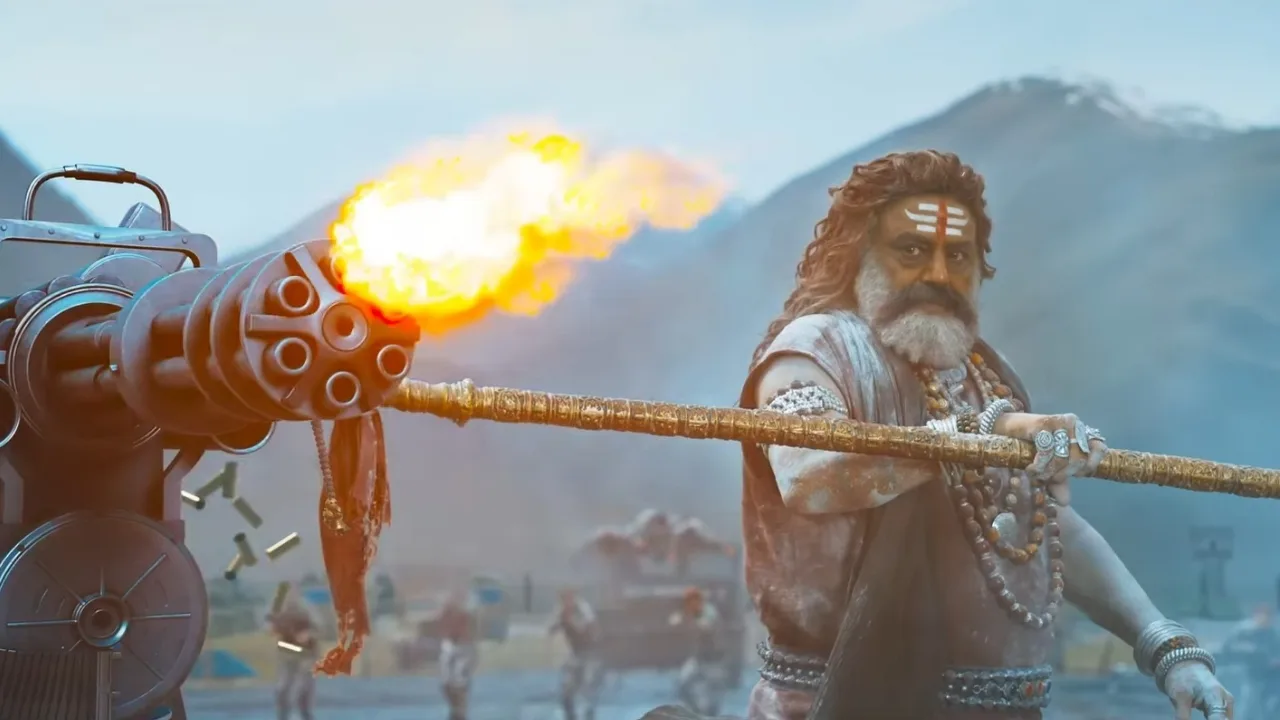
Akhanda 2: Logic Steps Aside, Mythic Mayhem Takes Over
A Boyapati film usually begins with a warning, and this one is no different. The director’s iconic “start camera, action” tone acts as a message: expect exaggeration, embrace the elevation, and forget realism.
In Akhanda 2, this formula is amplified. Balakrishna enters early, setting the tone for a narrative driven entirely by divine fury, supernatural heroism, and a sense of cinematic bravado that only the Boyapati–Balakrishna duo can deliver.
When a Nation Falls Under Threat, Akhanda Rises
The story ignites in high-stakes territory — a neighbouring nation plotting large-scale destruction by attacking what they believe is India’s spiritual backbone, Sanatana Dharma. Their weapon: a massive biowarfare operation aimed at the Maha Kumbh Mela.
Caught in the middle is Janani, a 16-year-old prodigy with an extraordinary IQ of 266, who accidentally becomes the custodian of the antidote she managed to create. As enemies close in, her uncle Akhanda returns to fulfil his promise of protecting her and restoring national stability.
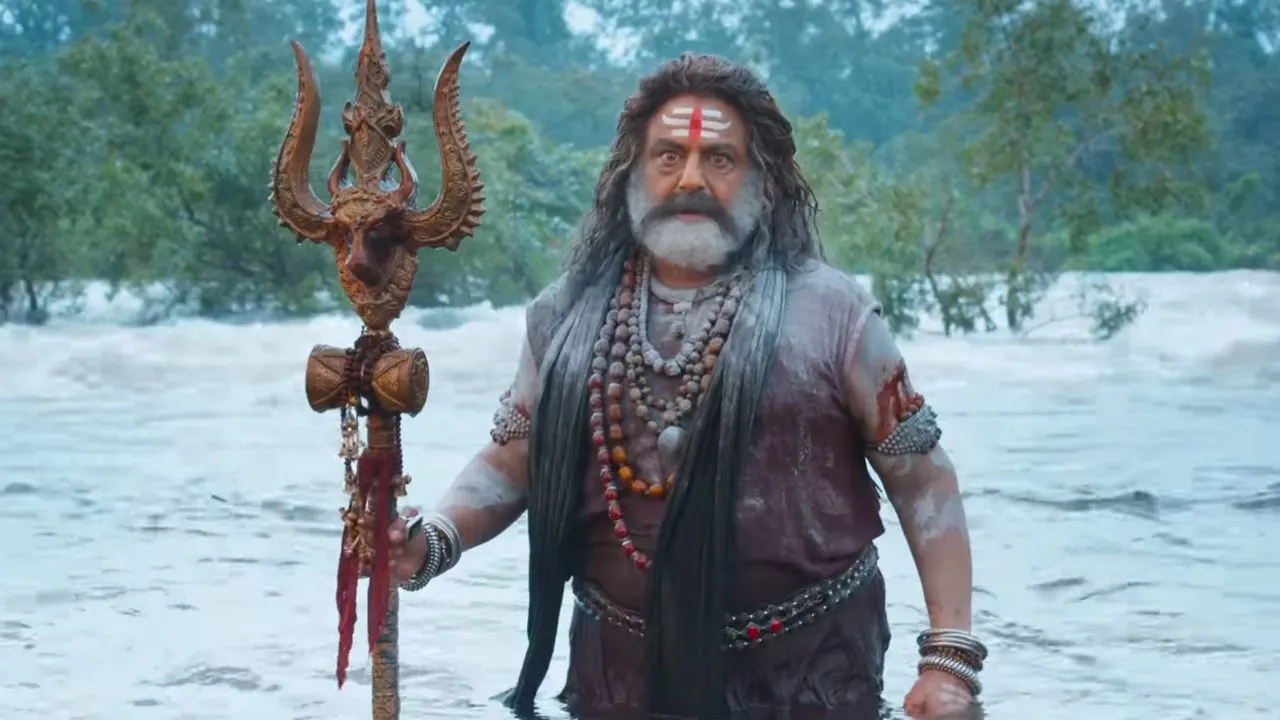
From this point, the film becomes a one-man war movie, powered entirely by Akhanda’s divine presence and his now-iconic trishul.
Akhanda 2 Story: A Cocktail of Divinity, Chaos & Supernatural Action
Boyapati leans fully into his own genre — “no-logic action.” The result is a series of sequences where:
- Guns bend like toys
- Helicopter blades stop mid-air
- Dozens of attackers fly away with a single punch
- Armed men choose to stab the hero with the guns they’re holding
Every action block throws a cluster of ideas at the viewer — some absurd, some unexpectedly inventive, all undeniably loud.
Even the geopolitical and biowarfare subplots are handled with dramatic intensity, though often without narrative depth. Complex national crises are explained through spiritual lectures, and India’s military and government appear almost as Akhanda’s spectators rather than participants.
Characters Speak Like They’re at a Pre-Release Event
In classic Boyapati fashion, everyone talks in mass dialogues. Simple exchanges sound like pre-battle declarations.
This time, the pitch is even higher — dialogues arrive like theatrical thunderbolts, adding to the film’s intentionally exaggerated tone.
Akhanda 2’s Unintentional Comedy Shines Bright
Despite its serious ambitions, the film slips into accidental humour.Villains perform like caricatures, and lines intended as high-stakes drama land as punchlines — including the moment a general learns his son died in combat due to “one punch from an Indian soldier.”These moments draw some of the biggest laughs in the theatre.
Akhanda 2 Hinges on Thaman’s Electrifying Music
If one person holds Akhanda 2 together, it’s Thaman.His ritualistic percussion, chants, and mass-elevation score elevate scenes that might otherwise collapse under their own ambition. In many portions, the background score is the real hero.
Performances: Balakrishna Soars, Supporting Cast Holds Ground
- Balakrishna delivers full conviction as Akhanda — his physicality and dialogue delivery power the film.
- Harshaali Malhotra brings sincerity to her role as Janani, though the writing offers her limited depth.
- Samyuktha appears briefly but attempts an unusual arc.
- Aadhi Pinisetty stands out with his grounded intensity despite restricted screen time.
Technical Aspects: Glossy Yet Uneven
The cinematography is competent, production values are strong, and the visuals maintain a temple-themed aesthetic. Editing could be sharper, and the story occasionally mirrors the structure of the first film without matching its emotional impact.
Akhanda 2 Verdict: A Film You Don’t Watch for Logic
Akhanda 2 is chaotic, loud, messy, and occasionally unintentionally hilarious — yet it delivers the strange cinematic energy that defines the Boyapati–Balayya universe.
If you step in expecting realism, you will likely walk out disappointed.But if you enter the theatre expecting explosions, divine theatrics, and Balakrishna fighting armies with a trishul, then Boyapati gives you exactly what he promised.
Akhanda 2 demands not analysis but surrender. And for fans of this brand of cinema, that surrender is half the fun.