
Mercedes may not be shouting from the rooftops, but inside the Formula 1 paddock, its name is being whispered with equal parts admiration and frustration. As the sport edges closer to the 2026 regulation reset, a seemingly dry technical detail has sparked a fresh political storm — and Mercedes is right at the heart of it.
This time, it’s not porpoising, ride height, or floor flexibility.
It’s engine compression — and how hot things get once the lights go out.
Why Mercedes Is Suddenly Under the Microscope
Formula 1 is never just about lap times. It’s about interpretation — of rules, of wording, and sometimes of physics itself.
Under the upcoming 2026 power unit regulations, the FIA reduced the maximum permitted compression ratio from roughly 18:1 to 16:1. The goal was clear:
- Control performance
- Prevent runaway speed gains
- Help new manufacturers like Audi compete fairly
On paper, it looked simple. But Formula 1 has never been a paper sport.
What raised eyebrows across the grid is how that compression ratio is measured — and how Mercedes may have approached it.
Compression Ratio, Explained Simply
At its most basic level:
- Compression ratio = how much the air-fuel mixture is squeezed inside the engine cylinder before ignition
- More squeeze means a bigger explosion
- Bigger explosion means more power
- More power means faster lap times
In Formula 1, even the smallest increase in efficiency can translate into real on-track advantage.
The FIA checks this compression ratio when the engine is cold and stationary — effectively in garage conditions, not during racing.
That detail is where the controversy begins.
The Cold Test vs the Hot Reality
Engines don’t race cold. They race extremely hot.
And as every school textbook teaches, metal expands when heated.
The theory being discussed inside the paddock is simple but powerful:If an engine is designed to meet the 16:1 compression limit when cold, but its internal components expand in a precise way once heated, the effective compression ratio can increase during racing conditions.
The engine stays legal in the garage. But on track, it quietly becomes more efficient.
Reports suggest Mercedes, along with Red Bull Powertrains, may have used this exact interpretation — not by breaking the rule, but by reading it carefully.
In Formula 1 terms, that’s elite-level engineering.
Why Rival Teams Are Unhappy
This isn’t outrage for the sake of drama. The concern is performance.
Even a tiny gain in engine efficiency can mean:
- A few extra horsepower
- A couple of tenths per lap
- The difference between pole position and P3
- Or between overtaking and staring at a rival’s gearbox for 60 laps
That’s why Ferrari, Honda, and Audi are watching closely — and not smiling.
Their argument isn’t that Mercedes has cheated.
It’s that the spirit of the rule was to limit compression under all conditions, not just when the engine is cold.
Mercedes’ position is equally clear: If the regulation specifies cold measurement, and the engine passes that test, it’s legal. Full stop.
Is Mercedes Actually Doing Anything Illegal?
Short answer: No
And that’s what makes the situation uncomfortable.
There’s no hidden mechanism.
No secret device.
No system that activates or deactivates.
It’s simply thermodynamics applied cleverly — using heat expansion to gain performance within the written rules.
That approach has defined Formula 1 for decades. The sport has always rewarded teams that exploit grey areas before others notice them.
Mercedes has just found itself on the opposite side of the debate this time.
The FIA’s Dilemma
Now the governing body faces a familiar crossroads.
Option one:
- Tighten the wording
- Risk disrupting teams mid-cycle
Option two:
- Let it run
- Observe the performance impact
- Step in later with a clarification or technical directive
Historically, the FIA tends to choose patience first and correction later. Let the innovation exist. Then quietly close the door in the following season.
That playbook may repeat itself here.
The Bigger Meaning Behind the Mercedes Debate
Zooming out, this situation isn’t really about compression ratios at all.
It’s about what Formula 1 always becomes during regulation changes:
- A battle of interpretation
- Engineers vs a 300-page rulebook
- Innovation hiding in the smallest details
Some eras are defined by aerodynamics. Others by tyres or fuel flow.
As 2026 approaches, Mercedes has reminded the paddock that heat itself can become a performance weapon.
Only in Formula 1 can something as basic as “metal expands when hot” turn into a championship talking point.
And only in Formula 1 can being legal in the garage — and faster on track — be the ultimate win.
✅FAQs
Why is Mercedes being discussed ahead of the 2026 F1 season?
Mercedes is linked to a clever interpretation of engine compression rules that could increase performance once the engine heats up during racing.
Is Mercedes breaking the rules?
No. The engine reportedly complies with FIA tests conducted under cold conditions, which is how compression is currently measured.
Why are rival teams concerned?
Because small gains in compression efficiency can translate into significant lap time advantages.
Will the FIA intervene?
Possibly, through future clarifications or technical directives, but no immediate action is confirmed.





‘Humne Mana Nahi Kiya’: Suryakumar Yadav Clears Air On India-Pakistan T20 World Cup Controversy
February 6, 2026
Suryakumar Yadav, India’s T20I captain, has firmly stated that the Indian team never refused to play Pakistan in the upcoming T20 World Cup, clarifying that the decision to step away from the marquee clash came from the other side. Amid growing speculation around the high-voltage India-Pakistan encounter, Suryakumar confirmed that India’s travel plans for the match are already in place,
Mercedes at the Center of F1’s Hottest 2026 Engine Debate
February 6, 2026
Mercedes may not be shouting from the rooftops, but inside the Formula 1 paddock, its name is being whispered with equal parts admiration and frustration. As the sport edges closer to the 2026 regulation reset, a seemingly dry technical detail has sparked a fresh political storm — and Mercedes is right at the heart of it. This time, it’s not
Life After Pep? Man City Prepare For A Post-Guardiola Future With Three-Man Shortlist
February 5, 2026
Man City are reportedly planning for life after Pep Guardiola, with Xabi Alonso, Enzo Maresca, and Cesc Fabregas named as potential successors. Manchester City may already be preparing for a future without Pep Guardiola, as fresh reports suggest the club has identified potential successors should the legendary manager decide to step away. Rumours surrounding Guardiola’s long-term future at Man City
“I Want To Win”: Giannis Opens Up As Bucks’ Future Hangs In Balance
February 5, 2026
Giannis demonstrated strong loyalty to the Bucks and Milwaukee, yet with trade speculation and playoff challenges, his future with the team remains uncertain as his peak years lessen. Giannis Antetokounmpo didn’t compose a letter, yet he could have just as well. In an unusual, intimate discussion this week with The Athletic and The Milwaukee Journal Sentinel, the Bucks star shared

Surya and the Stars: Inside India’s 15-Man Squad to Defend the T20 World Cup Title
February 4, 2026
India will defend their T20 World Cup title with a 15-member squad led by Suryakumar Yadav, featuring proven match-winners like Jasprit Bumrah and Hardik Pandya alongside emerging stars such as Abhishek Sharma, Tilak Varma and Rinku Singh. With just four days to go before their title defence begins, India arrive not as favourites weighed down by expectation, but as a
Mpetshi Perricard Forced to Retire After Freak Self-Inflicted Eye Injury in Montpellier
February 4, 2026
Giovanni Mpetshi Perricard’s return to competitive action ended in unfortunate fashion on Tuesday, as the Frenchman was forced to retire from his opening match at the Open Occitanie in Montpellier following a freak eye injury. The 22-year-old was competing in his first match since his early exit at the Australian Open, hoping to reset his season. Instead, his comeback was
Premier League Eyes Pride-Themed Match Ball as LGBTQ+ Campaign Strategy Evolves
February 4, 2026
The Premier League is reportedly preparing to change how it promotes LGBTQ+ inclusion, moving away from player-worn symbols and towards league-controlled visibility. According to a report by The Athletic, the league is considering replacing rainbow armbands and apparel with a pride-themed match ball, alongside enhanced stadium and broadcast branding. The shift reflects an attempt to refocus attention on inclusion itself,

Dhurandhar 2 Teaser Out: When Is Dhurandhar 2 Releasing In Theatres?
February 3, 2026
Dhurandhar 2 Teaser :Earlier today, Ranveer Singh shared on his Instagram account the first poster and the title of the eagerly awaited second installment. Dhurandhar The Revenge Teaser: Following the tremendous success of Dhurandhar, fans of Ranveer Singh have been anxiously anticipating the follow-up to his hit film. And can you believe it? The initial look at Dhurandhar: The Revenge

No Klaw, No Logic: Kawhi Leonard’s All-Star Snub Sparks NBA Debate
February 2, 2026
Kawhi was overlooked for the 2026 NBA All-Star reserves despite achieving his career-best statistics, while LeBron prolonged his streak to 22 seasons, igniting discussions regarding the selection method. On Sunday, the NBA announced the 2026 All-Star reserves, and while the Eastern Conference selections hardly surprised anyone, the Western Conference caused quite a stir. In what way? Indeed, Kawhi Leonard isn’t
What Records Did Carlos Alcaraz Break at the 2026 Australian Open?
February 1, 2026
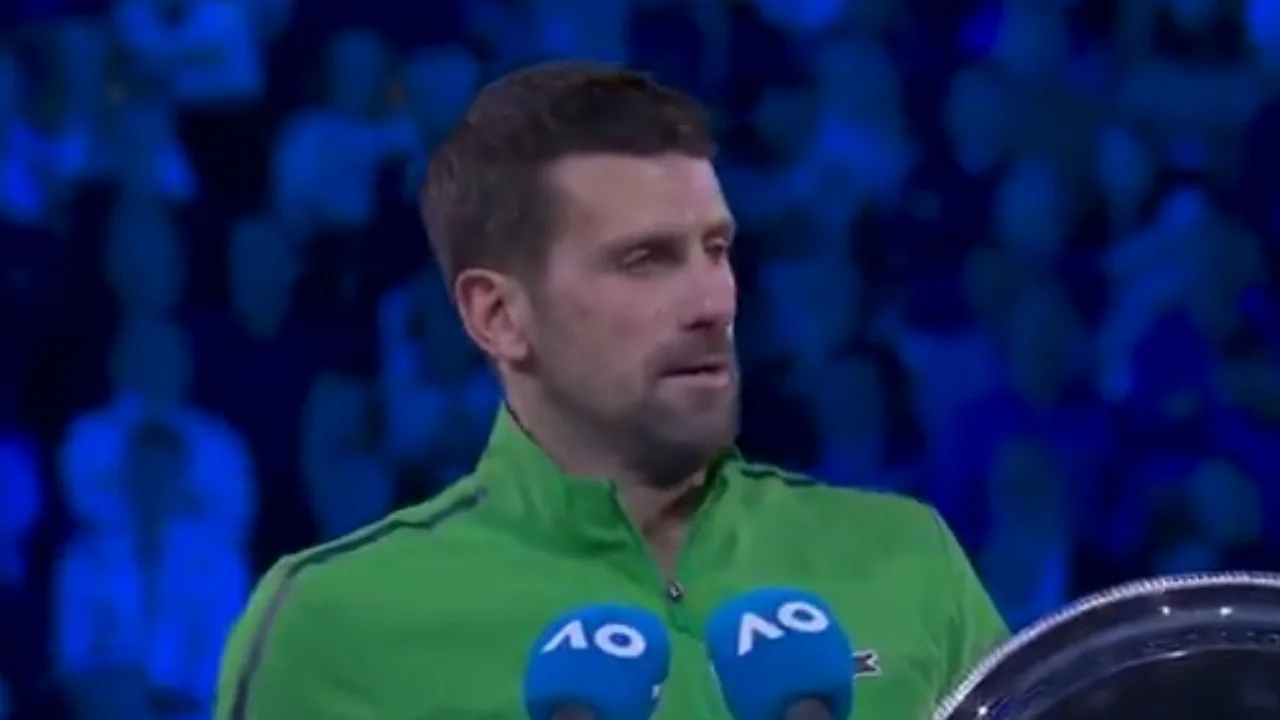
At 22 years old, Carlos Alcaraz triumphed over Novak Djokovic in the 2026 Australian Open, becoming the youngest male to achieve a Career Grand Slam and entering tennis history alongside legends. How Many Grand Slams Has Carlos Alcaraz Won Before Turning 23? Carlos Alcaraz reached Melbourne in pursuit of the lone title absent from his collection. He departed Rod Laver