


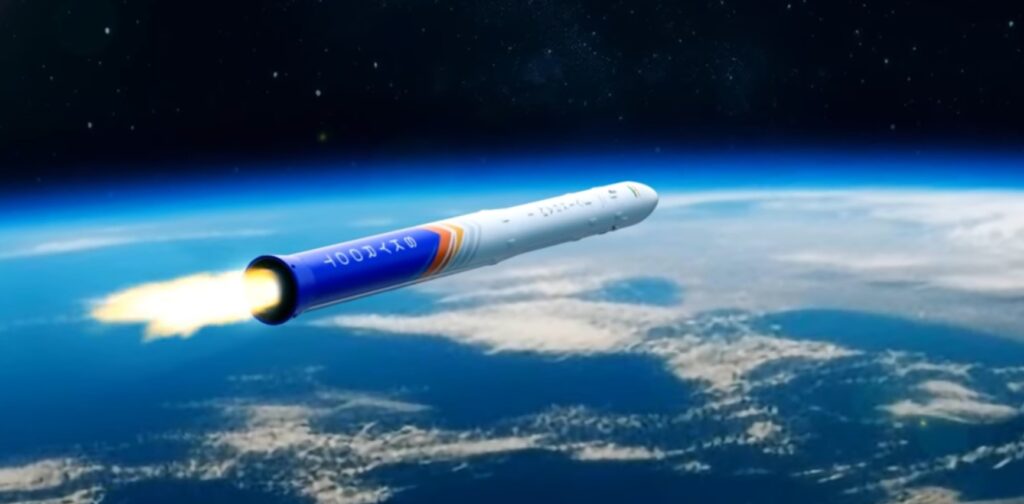
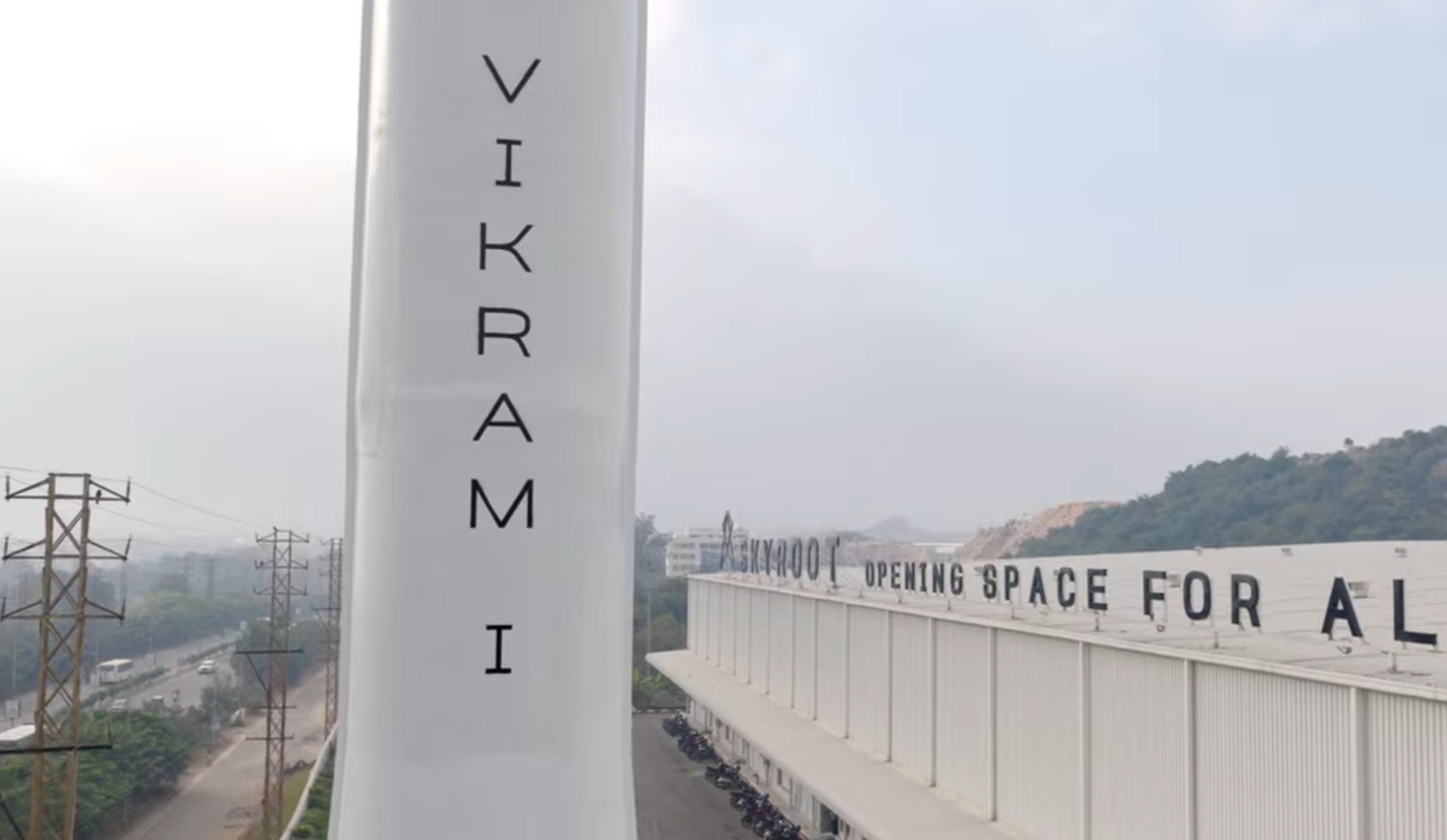
Vikram-I: Multiple satellites can be launched into orbit by the first privately developed orbital launch vehicle.On Thursday, Prime Minister Narendra Modi unveiled India’s first privately manufactured rocket, Vikram-I, and opened Skyroot Aerospace’s Infinity Campus in Hyderabad.
Inside Vikram-I: Design, Power, and Engineering Excellence
Multiple satellites can be launched into orbit by the first privately developed orbital launch vehicle.
India is one of the few countries in the world with space-related capabilities. India’s space industry has become an open, collaborative, and innovation-driven ecosystem in just the last six to seven years, according to Prime Minister Modi.


VIKRAM-I: WHAT IS IT?
Named for space pioneer Vikram Sarabhai, Vikram-I is India’s new private orbital-class launch vehicle, created by Hyderabad-based Skyroot Aerospace.
Prime Minister Narendra Modi unveiled this four-stage rocket, which uses quick, affordable launches to target the small satellite market.
With an all-carbon composite structure for lightweight strength and efficiency, it is 20 meters tall and 1.7 meters in diameter, producing 1,200 kN of thrust.
The rocket’s design places a strong emphasis on dependability, simplicity, and speed, allowing for assembly and launch from any location in less than a day. Its hypergolic liquid upper stage allows for precise orbital adjustments, while its solid-fueled first three stages provide a strong initial boost.
Important developments include ultra-low-shock pneumatic separation systems, sophisticated avionics for real-time guidance, and 3D-printed engines that reduce weight by 50% and production time by 80%.
A SKILLFUL VIKRAM-I
Depending on the inclination of the mission, Skyroot’s Vikram-I rocket can transport up to 350 kg to low Earth orbit (LEO) or 260 kg to a sun-synchronous orbit (SSO). For instance, at a 45° inclination, it can lift 290 kg to a 500 km SSO or 480 kg to a 500 km LEO.
Because of its restartable orbital adjustment module, the rocket can be used for dedicated launches, ridesharing missions, and even satellite deployment into multiple orbits.

STAGES AND DESIGN
Each stage of Vikram-I’s four-stage propulsion system is intended for a particular phase of the rocket’s ascent into space. Stage 1 is a 10-meter solid rocket motor composed of lightweight carbon fiber, known as the Kalam-1200. With 94% of its volume filled with propellant, it generates a peak thrust of 120 tons for 80 to 100 seconds. To increase efficiency, it uses a submerged nozzle, which is constructed inside the motor casing.
The second stage, the Kalam-250, is a solid-fuel motor that provides the mid-ascent push following booster separation. It functions similarly to the first stage in terms of burn style.
Stage 3, called Kalam-100, uses EPDM thermal protection, a rubber-like insulation that protects the motor during firing, and a carbon ablative nozzle, which gradually burns away to protect itself from extreme heat, to deliver 100 kN of thrust in vacuum for 108 seconds.
Lastly, a cluster of four Raman engines, each generating 3.4 kN of thrust, are used in Stage 4. These engines are hypergolic, which means that when two chemicals—MMH fuel and NTO oxidizer—come into contact, they ignite instantly. By using tiny, accurate pulses to guide the rocket into its precise target orbit, this stage manages roll control and fine orbital adjustments.
Its preparedness is confirmed by successful tests, such as Kalam-1200 proof pressure and payload fairing separation. In the face of international competition, Vikram-I supports India’s private space industry and ISRO.
In order to capitalize on the quickly expanding small-satellite market, which is a component of India’s space economy, which is expected to reach $77 billion by 2030, Skyroot plans to launch the vehicle in early 2026.